NextDC and Equinix colocation and hybrid depth
We operate in NextDC and Equinix with private suite and dedicated rack options, aligned to NetApp hybrid data services and how we run connectivity, not a one off cross connect quote.


Australian cloud, colocation, and Azure · one accountable team
One accountable Australian team across private cloud, NextDC and Equinix colocation, and Microsoft Azure (AMMP-approved). Two paths in: an AU$6,500 fixed-price Cloud Readiness Assessment for complex estates (5+ workloads, multi-site, board comparing migration partners) with credit-back inside 90 days. Or a free 30-minute scoping call for simple migrations (a Practice Management system, Microsoft 365, file shares) where we quote directly. Single throat to choke when the cloud breaks at 11pm.
Fixed price, two weeks. The fee credits against a Trucell-led migration commissioned within 90 days, and the written report is yours to keep either way.
We know what it's like to inherit a cloud stack that no single vendor fully owns: a Microsoft EA, a colo lease, a separate backup provider, an Azure footprint someone started and didn't finish, and your name on the incident ticket when any of them fails.
A pure resell of hyperscaler credits with no colocation, private stack, or Australian operations story. Or a one off lift and shift with no appetite for runbooks, IT support, and backup in the same engagement. For strategy only or major transformation without infrastructure or operations scope, start from strategic managed service or a scoped project instead.
Cloud claims are easy to make and hard to test. The signals we use in board reviews and tender responses are the same signals we operate against every day: ISO 27001:2022 certified delivery, named partner certifications, government panel approvals, and ten years of operations across thousands of managed endpoints. The four cards below are the cloud-specific version. Detailed evidence and certificate numbers live on /about/certifications/ and /partners/.
We operate in NextDC and Equinix with private suite and dedicated rack options, aligned to NetApp hybrid data services and how we run connectivity, not a one off cross connect quote.
Approved supplier under the Azure Migration and Modernization Program, with landing zone and stack alignment in Microsoft solutions the same way we run Entra, Intune, and on prem with clients.
ISO 9001 and ISO/IEC 27001:2022 certified (Trucell Pty Ltd, Citation Certification, certificate 500-27285-IS), with an annual SOC 2 Type II report. Public sector and regulated sector framing in governance and locations where you need the detail.
We align to regulated and enterprise buyers across industries we serve with change control that matches expectations. The same team threads into IT support, backup and recovery, and managed security when that is in your scope of care.
Same systems, same budget, different owner. This is what actually changes when accountability sits in one place.
The Cloud Readiness Assessment ends in three answers: stay on-premises, migrate with Trucell, or migrate with someone else. AU$6,500 fixed, two weeks from kick-off, and the written report is yours whether or not you migrate with us.
Prefer to talk now?1800 316 529…Pick a time(opens Microsoft Bookings in a new tab)
The brief takes a few lines: current hosting model, in scope workloads, target timeline, and your top risk. We route it to the right owner with a practical next step, no obligation.
Cloud as an operating model, one thread from first scope through design, migration, governance, optimisation, and day two support, not a one off migration project.
Workloads, dependencies, recovery intent, and boundaries before anything moves.
Target architecture, landing zones, identity, and data paths across hybrid and cloud.
Controlled cutover, sequencing, and validation so ownership stays clear.
Policies, controls, assurance artefacts, and FinOps discipline that reviewers can trace.
Right sizing, performance tuning, and spend clarity without silent drift.
Day two operations, escalation paths, and continuous improvement with named owners.
Strong facilities and partner badges do not replace a single recovery story. Most damage shows up after go live, when backup scope, identity, and “who owns the restore” were never aligned.
You should not need five relationships to get a straight answer about recovery, identity, and who is on the hook when something breaks. If your next migration or colo refresh is already on the plan, the fair ask is a single written thread from workload to operations, not another partner logo.
These are the cloud and infrastructure outcomes Trucell owns end to end, not a loose list of vendor logos. If something below is what you need, we can scope it with clear ownership and operations.
Isolated compute for workloads that need predictable resources and separation, without necessarily building a full private cloud footprint.
Dedicated environments for organisations and government: design, implementation, and ongoing operations under one accountable team.
For compute intensive workloads, we scope and operate high performance computing environments with infrastructure and network design matched to throughput, latency, and recovery requirements.
We provide remote hands for hosted and colocated estates, giving you an accountable local operations path for physical intervention, troubleshooting, and change execution.
We design and manage the cloud stack, virtualisation, storage, networking, and align connectivity and network design so what runs in production matches the architecture, not a slide deck. Where we supply physical kit, hardware procurement follows the same specification discipline.
We also deliver cloud access, carrier and service provider connectivity, international network paths, and peering design, so workloads and users keep predictable performance across regions and providers.
Trucell is an approved supplier under Microsoft’s Azure Migration and Modernization Program. We consult on Azure landing zones and migration paths, build Azure aligned stacks, and pair public cloud work with your private and colocated estates. See also Microsoft solutions.
Australian MSP delivery with facility depth in Equinix, Microsoft program access for Azure work, and data and endpoint tooling we operate day to day, not shelfware.
Where workloads belong in Azure or need cost effective AU VPS, we align architecture and operations, including BinaryLane hosting when that fits the design.
Across government & public sector, healthcare, mining & resources, education, aviation, professional services, legal, and construction, we align governance and change control to sector expectations.
Infrastructure and cloud panels often re use the same headings. Use this as a practical scorecard so decisions are based on recoverability and ownership, not platform hype.
What to ask: where data lives at rest and in flight, who can access the rack or tenant, and how sub processor change is governed? How we answer: colocation and stack owned in our operating model, with Microsoft and connectivity partners named where they touch your data; we point reviewers to governance and, where it matters, sector appropriate assurances, not a generic “our cloud is safe” line.
What to ask: are you a named supplier on Microsoft’s program, and who designs identity, network, and backup in the same engagement? How we answer: AMMP as an approved supplier, with Azure aligned work described alongside private and Equinix estates in Microsoft solutions, and handover to IT support and backup and recovery when that is the agreed operations.
What to ask: facility tier, access control, and how cross connects and latency fit your app architecture? How we answer: we scope Equinix options with the workloads in mind, align to connectivity and network design, and do not treat colo as a box rental separate from the stack and operations story.
What to ask: can you show monthly spend path across on prem, colo, and public cloud, and who owns the optimisation conversation? How we answer: we separate what we operate vs what the hyperscaler bills, tie recommendations to the architecture diagram, and avoid “surprise” migrations that only move the invoice, not the risk or performance story.
What to ask: RPO and RTO by workload, who runs restore tests, and how often the board could see evidence? How we answer: written scope in backup and recovery, named owners, and a test rhythm that does not depend on a single architect remembering, see also the diligence cards below.
What to ask: when does support “own” incidents across hybrid, and which PSA or CMDB is the system of record? How we answer: a described handover into managed support with the same team that can speak to the facility, cloud, and data path, not a separate outsourcer with no colo relationship.
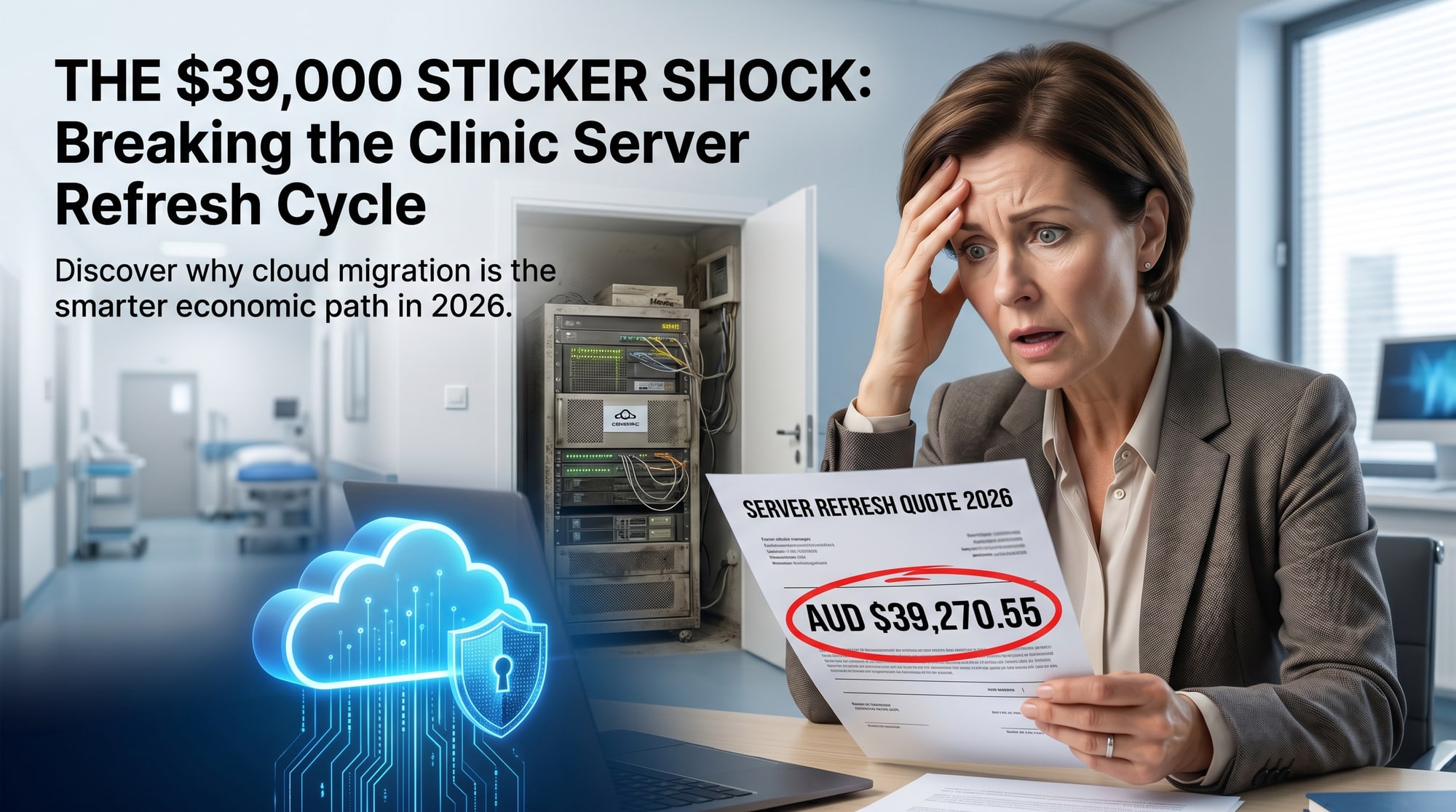
Two-week Cloud Readiness Assessment: AU$6,500 fixed price, paid on card or by purchase order. If you commission Trucell-led migration inside 90 days, the AU$6,500 credits against the engagement. If you don’t, you keep the report and we stop emailing.
Timelines from real engagements
A single-site allied health practice on Microsoft 365 plus file shares typically migrates in 6 to 10 weeks after blueprint sign-off. A 3-site GP group with a mid-sized PACS or LOB application runs 12 to 18 weeks. The assessment gives your estate its first indicative range; the blueprint is where dates firm up.
Prefer to talk now?1800 316 529…Pick a time(opens Microsoft Bookings in a new tab)
Not ready to reserve? The free 30-minute scoping call is the smallest commitment: no payment, no pitch deck, and we will decline the engagement if your scenario does not fit.
What you bring to kick-off
What you get back in two weeks
Whether you shortlist Trucell or another provider, these questions surface gaps before they become outages or invoice surprises.
Ask for a single written answer covering backup scope, identity, DNS, and facility, not five owners with five runbooks.
Restore drills on a schedule you could show an auditor, with named owners, not a one off ticket when someone remembers.
If Equinix, Azure, and on prem cannot be drawn on one architecture with data paths, costs and risk will drift.
We document dependencies, recovery intent, and who operates what before anything moves, whether the landing zone is Equinix, Azure, or both.
Workloads, dependencies, recovery objectives, and identity boundaries, before anyone migrates a VM or cuts over DNS.
Target architecture for private cloud, colocation, hybrid, or Azure, with Microsoft stack alignment when Entra ID and Intune are in play.
Backup scope, immutability, and restore drills written into the runbook, not a one off test ticket.
Managed support, patching, roadmaps, and clear escalation, so the environment does not rot after go live.
We optimise for predictable operations: tested recovery, controlled change, and costs you can explain, whether the workload sits in Equinix, Azure, or both.
Common due diligence questions before migration, renewal, or architecture review.
The Cloud Readiness Assessment is AU$6,500 fixed (2 weeks). The Migration Blueprint is AU$18,000 fixed (4 weeks). A Pilot Migration covering one production workload is AU$45,000 indicative (8 to 10 weeks). Full-programme migrations beyond the pilot are scoped against the workload count, identity boundary, and target landing zone in the blueprint; typical SMB to mid-market migrations run AU$80,000 to AU$400,000 depending on size. Every tier has fixed deliverables on /cloud-readiness-assessment/. We do not bill discovery hours separately.
No, unless you explicitly choose a non-Australian region. Trucell private cloud sits in NextDC and Equinix Australian facilities. Azure deployments default to Australia East or Australia Southeast. The Foundations Diagnostic and Migration Blueprint both explicitly document data residency for every workload and every back-up copy, including incidental log routing through Microsoft 365 telemetry. We will not route your data offshore as a default and we will surface anywhere it would happen.
Vendor independence and pricing transparency. Microsoft and AWS sell their cloud; the assessment lands in theirs. A big-four consultancy sells a six-figure transformation programme; the assessment lands in that. Trucell sells private cloud, Azure, and colocation, so the TCO comparison is honest across all three. Beyond that: our cost-to-deliver is published on the page, our governance is independently audited (ISO 27001:2022, certificate 500-27285-IS), and our diagnostic credits against migration. If the current relationship is working, we will tell you that during the free 30-minute scoping call and decline the engagement.
Yes. The report is yours from the moment it lands in your inbox. We have no clause that obliges you to migrate with Trucell, no exclusivity period, and no language locking the report to our methodology. Hand it to your board, auditor, in-house IT, or a competing vendor; it stands on its own. If you do migrate with Trucell inside 90 days, the AU$6,500 credits automatically against the first migration invoice. If you don’t, the engagement ends and we stop emailing you.
Real numbers from real engagements: a single-site allied health practice on Microsoft 365 plus file shares typically migrates in 6 to 10 weeks after blueprint sign-off. A 3-site GP group with a mid-sized PACS or LOB application runs 12 to 18 weeks. A hospital corporate IT or multi-site imaging programme is 4 to 9 months with a phased cutover. The blueprint phase (Tier 2) is when these timelines firm up because that is when the workload inventory and the change-window calendar are documented; the diagnostic phase gives indicative ranges only.
The free 30-minute scoping call is the smallest. No payment, no pitch deck; we ask which tier fits and decline if your scenario does not. If the call confirms fit, the AU$6,500 Foundations Diagnostic is the smallest paid step. You walk away with a written report you own. If we are not the right partner, you find that out for AU$6,500 instead of for the cost of a failed migration.
Share a short cloud brief and we will route your request with practical next steps. Best for procurement led teams comparing delivery models.
The Cloud Readiness Assessment ends in three answers: stay on-premises, migrate with Trucell, or migrate with someone else. Two weeks from kick-off. AU$6,500 fixed. Credit-back if you choose Trucell. The written report is yours regardless. The cost of not deciding is another quarter of vendor finger-pointing and another conversation with the board that does not move forward.
Prefer to talk now?1800 316 529…Pick a time(opens Microsoft Bookings in a new tab)
Simple migration of one or two systems (a Practice Management system, Microsoft 365, file shares)? Skip the assessment: book the free scoping call and we will quote directly. Or download the cloud diligence checklist.
Vendor lines and technologies we deploy and support as part of this solution, not a generic catalogue.

Microsoft Cloud and modern work, Azure, Microsoft 365, Entra ID, and security solutions Trucell delivers end to end.
Read more
NetApp hybrid and multi-cloud data services, storage and data path design.
Read more
NinjaOne RMM and NinjaOne Backup, endpoint operations, data protection, and reporting as part of Trucell managed IT.
Read moreJump to an industry, partner, or service line, most Trucell clients touch more than one.
How we tune governance and service levels to sector risk, not generic SMB defaults.
Read moreClinical systems and imaging adjacent infrastructure where uptime and change control matter.
Read moreIdentity, endpoints, and backup patterns for firms handling sensitive client data.
Read moreData location, access, and retention aligned to how your practice actually works.
Read moreSites, mobile users, and head office, connectivity and collaboration without a brittle stack.
Read moreStarlink, Starlink multiplexing, fixed wireless, and enterprise WAN, integrated with security and operations for remote sites.
Read moreIdentity, endpoints, and safeguarding across campuses, labs, and hybrid learning.
Read moreStable operations and integrations for airlines, airports, and aviation services teams.
Read moreAgencies and emergency services, security baselines, governance, and field ready support.
Read more
Silver Partner stack for VoIP, UC, and contact centre, integrated with network, identity, and backup paths you actually operate.
Read moreHybrid and multi cloud data paths: snapshots, replication, and performance matched to RPO/RTO talk.
Read moreEnterprise imaging and PACS/RIS integration depth for healthcare organisations balancing clinical outcomes and cybersecurity.
Read moreOperations visibility: patching, inventory, and reporting once workloads are live.
Read more
Next generation firewalls, SASE, and cloud security where your architecture standardises on Palo Alto.
Read more
Gold Partner stack for NGFW, SD WAN, ZTNA, and network security at the edge.
Read more
Singularity XDR for endpoint protection, deployed and tuned as part of managed security services.
Read more
AI assisted SIEM and SOC visibility, correlated alerts and reporting, not log storage alone.
Read more
Falcon telemetry and response where your estate standardises on CrowdStrike.
Read more
Managed detection for persistence, reseller led threats, and Microsoft 365 adjacent risk.
Read moreImmutable backups, M365 protection, and DR that gets tested, not just configured once.
Read morePerimeter, endpoints, and monitoring sized to your risk profile.
Read moreAssess and implement mitigations aligned with the Australian Cyber Security Centre Essential Eight, with operations from Trucell IT support where you need it.
Read moreTenant hygiene, licensing clarity, and collaboration defaults before you scale users.
Read moreIn house development for APIs, integrations, and small applications, owned with your managed IT and change controls, not a disconnected vendor.
Read moreLAN, WAN, and Wi‑Fi that stay documented when the next project lands.
Read moreBusiness internet, WAN paths, and redundancy aligned to cloud and security design.
Read moreManaged racks in NextDC and Equinix with cross connects, smart hands, and one accountable operator.
Read more3CX, Teams Voice, SIP, and recording paths integrated with network, identity, and backup.
Read moreCo managed IT options, TAM led roadmaps, and QBRs so IT spend, projects, and support stay on one thread.
Read moreServers, storage, and endpoints sourced with clear specs, resilience options, and lifecycle handover, not cart only buying.
Read moreService desk and steady state ops with clear triage and SLAs.
Read moreRadiology depth: uptime, DICOM and modality paths, PACS/RIS, storage, diagnostic displays, and vendor coordination, beyond desktop MSP defaults.
Read more