

Published: By Trucell5 min read
What replacing an old PBX actually costs in Australia, and how to read your phone bill first
PBX replacement cost in Australia: what your current phone system really costs, what hosted VoIP pricing includes, and how offices of 10 to 50 compare both.
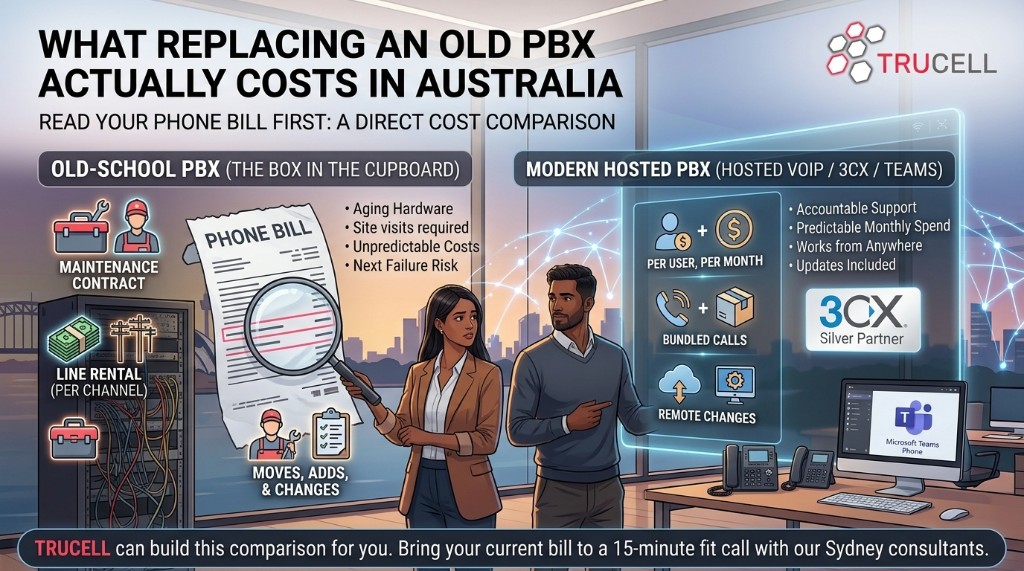
Most offices only think about their phone system twice: the day it is installed, and the day it breaks. In between, the bill arrives every month, gets paid, and nobody reads it. If you are wondering whether replacing your old PBX would save money, the honest answer is: it depends on what you are paying now, and most owners do not actually know.
This guide will not give you a magic number, because pricing depends on how many people you have, what handsets you want, and how your calls flow. What it will do is show you how the costs work on both sides, so that when quotes arrive, including ours, you can read them properly.
What an owned PBX really costs
The box in the comms cupboard was paid off years ago, so it feels free. It usually is not. The recurring costs hide in different lines of different bills:
- The maintenance contract. Most owned PBX systems carry an annual maintenance or support agreement with whoever installed them. This is often the single biggest hidden line, and it buys you callouts for a system that gets older every year.
- Line rental. Traditional PBX systems connect to the network over rented lines or channels, each with a monthly charge that exists whether or not anyone makes a call.
- Call charges. Per call or per minute rates on top of the line rental, usually on a plan negotiated years ago and never revisited.
- Moves, adds, and changes. Every new starter, renamed extension, or changed greeting that needs a technician visit is a billable callout on an owned system.
- The next failure. Parts for older PBX hardware get scarcer and dearer. When the box fails, the phones stop until someone attends, and that risk grows every year the system ages.
Pull your last three months of bills and find each of these. That total, not just the carrier bill, is your real monthly phone cost. It is the number any replacement quote has to beat, or at least justify.
How hosted PBX pricing works
A hosted phone system, whether built on 3CX or Microsoft Teams Phone, replaces the box and the lines with a service. The pricing model is different in shape, not just size:
- Per user, per month. The core cost scales with the number of people, not the number of lines or channels. The system, its upkeep, and its upgrades are inside that price, so there is no separate maintenance contract on ageing hardware.
- Calls. Depending on the plan, calls are bundled or charged on modern rates. Either way, the rates are current ones, not a plan from a different decade.
- Handsets are optional. People who want a desk phone keep one. People who live in a headset use an app on their computer, and the office number can ring a mobile app anywhere. You stop paying to put hardware on desks that do not need it.
- Changes are support requests. A new starter, a changed greeting, or a rerouted after hours flow is remote configuration work, not a site visit.
The other difference is where the risk sits. On a hosted system, keeping the platform alive is the provider’s job. On an owned system, it is yours, and you pay for that either through maintenance or through downtime.
How to compare the two honestly
A fair comparison is total against total, not sticker against sticker:
- Build your current total. Line rental, call charges, the maintenance contract divided by twelve, plus a fair estimate of callout fees for a typical year.
- Get the hosted quote as a total too. Users multiplied by the monthly rate, plus call plan, plus any handsets you actually want, amortised over their life. Ask what the number porting and cutover costs, and whether training is included.
- Compare what happens when things change. Add three staff. Open a second site. Send half the team home for a week. Price both systems in each scenario, because that is where owned PBX costs jump and hosted costs mostly do not.
- Ask who answers when it breaks. A cheap monthly rate with no accountable support has a cost too; it just arrives later, during an outage, when every missed call is a client wondering why you did not pick up.
If the hosted total is not clearly better once all of that is on the table, keep your PBX a while longer and revisit at the next failure or the end of the maintenance term. Some well maintained systems genuinely are cheap to run for another year or two, and a provider who tells you that to your face is one you can trust with the eventual replacement.
What we do differently
Trucell deploys hosted PBX on 3CX (we are a 3CX Silver Partner) or Microsoft Teams Phone, ports your numbers under a documented cutover plan with a rollback path, and supports the phones under the same team and bill as the rest of your IT. We do not publish a one size fits all price because the honest number depends on your user count, call flows, and handsets; what we will do is build the comparison above with you, from your actual bill, before you commit to anything.
If your phone system is a box in a cupboard with a maintenance contract attached, start at our hosted PBX page or bring your bill to a 15 minute fit call.